The Knights of the Round Table
The tavern as a haven for wandering souls.
The Knights of the Round Table
The osteria, something modern people pretend they don't understand anymore despite all the damage it's taken, is still one of the most wonderful places in our country—a hidden reserve of faith in life and secret joy, precisely because it's tinged with melancholy. Its characters brace themselves against a future that seems to arrive before the present does, a present that in modern times shows up early, making time feel so short it almost seems unreal. In life, they believe in just one thing: themselves. They drag themselves along, bent over, even though they play in a team of skyscrapers. Drunkards because they're failed entertainers, tired defenders. They pretend to imagine, finding their secret truth—the bittersweet truth of segregation or sharp aphorisms. They think devotion is a trick, without solemnity or mercy. They live in a twisted universe, shattered by light that now turns harsh, where it seems they don't move of their own free will.
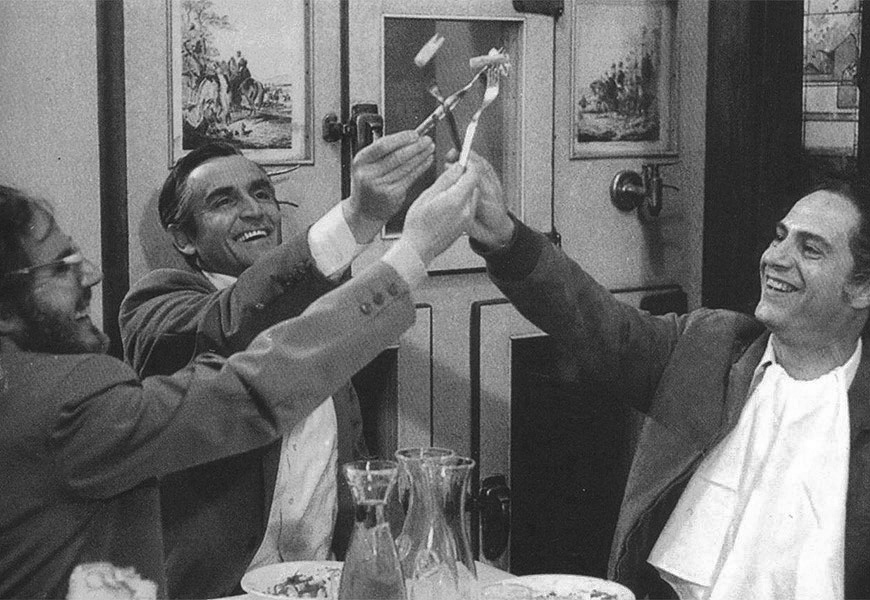
The cheerful knights tell this story, of a world split clearly between past and present, where the present is the true time of eternity lived in every moment. A human and poetic struggle that appeals to faith, drawing harmony from pain. A suffering that hides a fragile hope of salvation, a Roman-style meeting in dialect—that tool by which a cultural system codifies the rules of its internal changes, swallowing all the poison behind a smile. That absurd and funny side that soothes human anxieties and finds its final form: reconciliation. The Romanesco dialect carries a colorful feeling, thanks to the purity of passion; some expressions have shades of brightness, depth, and evoke powerful feelings. Their proud osteria spirit, rich in imagery, conjures an explosion of colors that reminds me of "Sennelier" with its soft oil pastels.