From Thermopolium to Osteria
A convivial meeting place since Roman times
From Thermopolium to Osteria
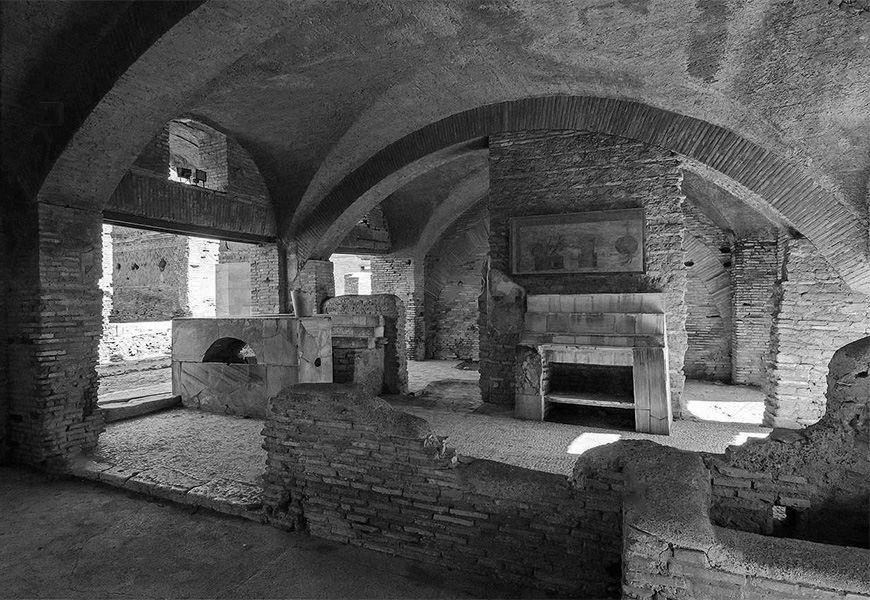
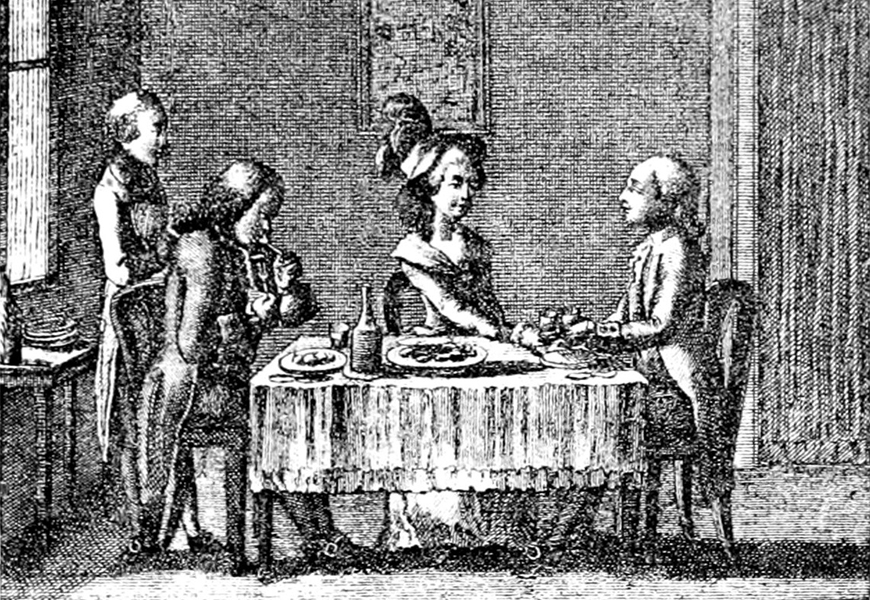
During the Hadrianic era, there already existed a refreshment place where it was possible to buy drinks and ready-to-eat food, the Thermopolium, with remains preserved in the archaeological sites of Pompeii, Herculaneum, and Ostia Antica. From the 12th century, Saxons, Flemings, and French began visiting Italy. In Rome, the places where wine was served were called Hostellerie (from Old French), Tabernae, and Hostariae. The term "osteria" derives from the Latin "hospite". The first occurrence of the term "Hosteria" is found in 13th-century Venetian documents, and its etymology refers to the function of the place, which is hospitality. In the Middle Ages, the tavern was the environment where minstrels, jesters, and jugglers performed, until the 16th century, an extraordinary period for Italy that influenced all of Europe, spreading the arts, the masked comedy, the theatre of Ruzante, Machiavelli, and later the melodrama, a form of singing drama. In London, during the Elizabethan era, the inn was the space dedicated for actors, where they performed in the middle of the audience. William Shakespeare staged his plays in inns, just like bands perform today in English pubs. In Paris, where Italian comedians settled, a venue was opened for their shows called "L'Hotel de Bourgogne". The Germans contributed to theatre with Hans Sach. Spain and Portugal rediscovered Latin comedy with Plautus and Seneca in tragedy.
The 1600s mark the "golden age" in France with the rise of Molière and the founding of the Comédie-Française. In the 1700s, Carlo Goldoni stood out by renewing theatre through writing scripts for each actor, eliminating the improvised scenario, with his masterpiece "La Locandiera" being irresistible. In Paris, Caron de Beaumarchais invented the famous "Barber of Seville" and secured copyright recognition. Germany was an agglomeration of small states lacking a unified German identity. Shows built on improvised scripts took place in taverns. Johann Gottsched contributed to linguistic unification, Gotthold Lessing gained prominence, but the most influential was Friedrich Schröder, who founded a drama school in Hamburg. In the Netherlands, Joost van den Vondel gained renown for his theatrical works. Denmark saw the birth of its first theatre thanks to Ludvig Holberg, and Johannes Ewald wrote the melodrama "The Fishermen", from which the Danish national anthem was derived.
In Sweden in 1786, the "Swedish Academy" was opened, which today awards the Nobel Prize in Literature. Russia was enlightened by Fedor Volkov, considered the father of Russian theatre. In 1732, architect Bartolomeo Rastrelli designed the "Winter Palace", home to the Hermitage Museum in Saint Petersburg. In the 1800s, Romantic drama flourished in Europe. Paris became an artistic center, like 15th century Florence and 17th century Rome. In Italy, epic-lyric poetry spread. Alessandro Manzoni was born in Milan in 1785, Giacomo Leopardi in Recanati in 1798. In 1815, Silvio Pellico wrote the drama "Francesca da Rimini". However, communities preferred melodrama, and Milan established itself as the European center of lyrical theatre with Gioachino Rossini and Gaetano Donizetti… In 1858, Giacomo Puccini, the most significant opera composer in musical history, was born in Lucca. Italy proclaimed its unified identity in 1861 and shortly afterward its capital, Rome. Finally, amidst dramas and melodramas, the 19th century drew to a close and brought with it the sublime mysteries of "the Hero of the Two Worlds," Giuseppe Garibaldi.